What should families know before choosing an AEIS preparation route?
Understanding the AEIS preparation landscape
For families considering a move into Singapore's mainstream school system, the Admissions Exercise for International Students (AEIS) is a key step. Choosing how to prepare for these exams can feel like a puzzle. The right preparation route depends on the child's current academic level, the family's timeline, and the desired school placement. Before committing to any programme, it helps to look at the full picture: what the exams test, how registration works, and what support options exist.
What is the AEIS and why does preparation matter?
The AEIS is a centralised exercise conducted by the Ministry of Education for international students seeking admission to Primary 2-5 and Secondary 1-3 in Singapore's government and government-aided schools. The exams assess English, Mathematics, and in some cases Science, at the level the student hopes to enter. Because the curriculum here follows the national syllabus, preparation is not just about passing a test; it is about bridging any gap between what the student already knows and what Singapore schools expect at that entry level. A well-structured AEIS preparation programme can make this transition smoother.
Key factors when choosing a preparation route
Understanding the exam format and content
Every family should start by becoming familiar with the exam structure. The English paper tests reading, writing, and language use. The Mathematics paper follows the Singapore syllabus, which often covers topics at a different pace or depth than other systems. Some students find that even if they are strong in Maths at home, the Singapore approach to problem sums and heuristics requires practice. Knowing these details early helps families decide whether a general tuition centre, a dedicated AEIS preparation programme, or self-study with past papers will work best.
Timeline and exam dates
The AEIS is held once a year, typically around September or October, with results released in December. There is also a Supplementary AEIS (S-AEIS) in February or March for some levels. Families need to align their preparation timeline with these dates. Starting preparation three to six months before the exam is common, but some students need longer if their English proficiency is still developing. Late registration can mean a rushed preparation, so planning ahead matters.
Entry level and eligibility
Not every student qualifies for every level. The child's age determines the appropriate entry level, and the school placement after the exam depends on available vacancies. Some students may need to sit for a lower level than their age suggests if their academic background does not match the Singapore syllabus. A good preparation programme should include an initial academic assessment to identify the child's current level and recommend the right target.
Types of preparation routes
Families generally have three broad options: full-time preparatory courses, part-time classes, and self-study with or without a tutor. Each has trade-offs in cost, time commitment, and depth of coverage. Full-time programmes, such as those offered by private schools, immerse the student in the Singapore curriculum for several months. Part-time classes, often held on weekends or after school, can fit around existing school hours. Self-study requires strong discipline and access to quality materials, but can work for highly motivated students.
Full-time preparatory programmes
These are intensive, often running five days a week, and cover English, Mathematics, and sometimes Science. They mimic the pace of a Singapore classroom. The advantage is continuous exposure and the chance to build study habits. However, the cost and time commitment are higher. Families should check whether the programme includes mock tests, regular progress reports, and guidance on the application process itself. Some schools also offer support for planning an AEIS application, helping with registration forms and school placement advice.
Part-time and weekend classes
For students already attending a school in Singapore or who cannot commit to a full timetable, part-time classes offer flexibility. These sessions usually focus on problem areas and exam strategies. Because contact hours are fewer, the student needs to put in independent practice. A part-time route can work well if the child already has a solid foundation in most subjects and only needs targeted revision.

United Ceres College is also on YouTube.
What to look for in a preparation programme
Regardless of the route chosen, families should evaluate a few practical aspects. First, the teachers should be familiar with the Singapore syllabus and the AEIS exam format. Second, the programme should provide sample papers and regular timed practice to build exam stamina. Third, it should offer clear feedback on the student's progress, not just generic lessons. Fourth, the programme should address the application process itself, since missing a registration deadline can undo months of preparation. Many programmes now include support for planning an AEIS application, covering eligibility checks, document requirements, and key dates.
Common pitfalls to avoid
- Starting too late: The AEIS tests a complete syllabus level. Cramming a few weeks before the exam rarely works, especially for English, which needs sustained practice.
- Ignoring the English component: Some families focus heavily on Mathematics and assume English will be easier. In reality, the English paper is often the biggest hurdle because the curriculum emphasishes high-level comprehension and writing skills.
- Choosing a programme without academic assessment: A one-size-fits-all approach can waste time. A good programme will test the child at the start and place them at the right level.
- Overlooking the application process: Passing the exam is only half the battle. School placement depends on the child's score and the availability of places. Families need to understand how the posting system works.
How to make the final decision
Start by having a honest conversation with your child about their comfort with English and their study habits. Then research the options available in Singapore. Visit the websites of a few private schools that offer AEIS preparation and ask about their curriculum, teacher qualifications, and past placement rates. It is also worth contacting the Ministry of Education's website for the latest exam dates and registration procedures. A good preparation route is one that matches the child's learning pace, the family's schedule, and the budget, while also providing clear support for planning an AEIS application.
Practical steps to get started
- Check the official AEIS or S-AEIS dates on the MOE website and mark them on your calendar.
- Have your child take a diagnostic test at a reputable centre to identify their current level.
- Discuss with the centre what preparation timeline they recommend based on the test results.
- Consider whether full-time or part-time study suits your family's routine.
- Confirm that the programme covers application support, not just exam content.
Families who take the time to understand these factors before enrolling often feel more confident on exam day. The AEIS is a high-stakes test, but it is also a fair one. With the right preparation, a child can demonstrate their ability and secure a place in a school that fits their needs.
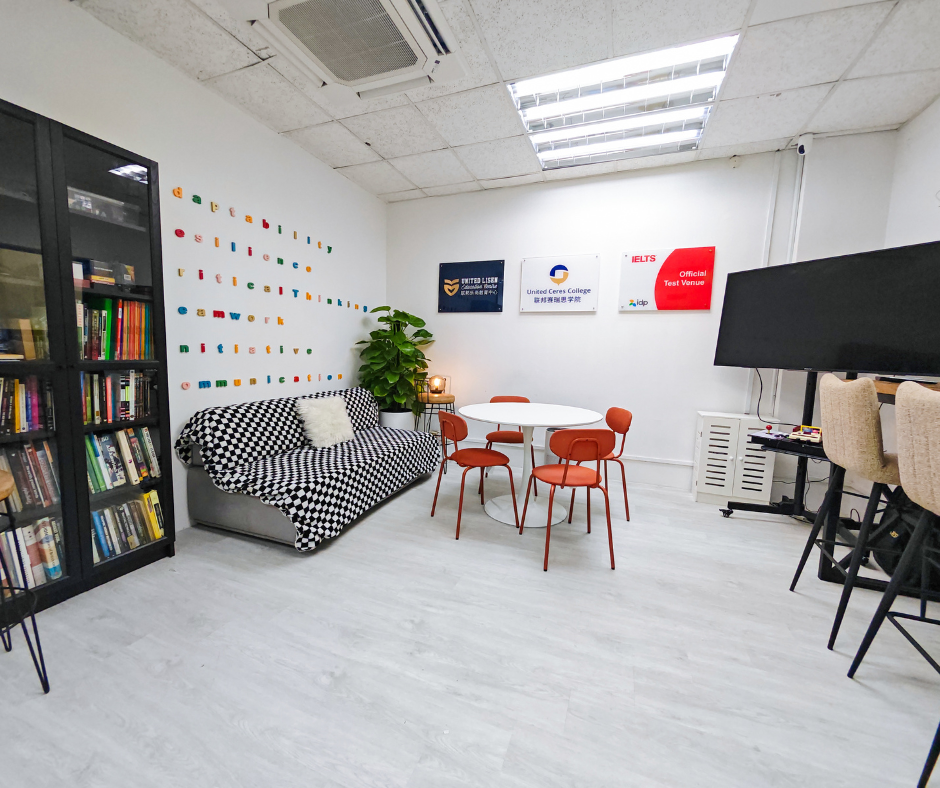
For more information about AEIS preparation programmes and how they can support your child's transition, you may contact United Ceres College at 37 Middle Rd, #05-00, Singapore 188946, or call +65 8699 3609.